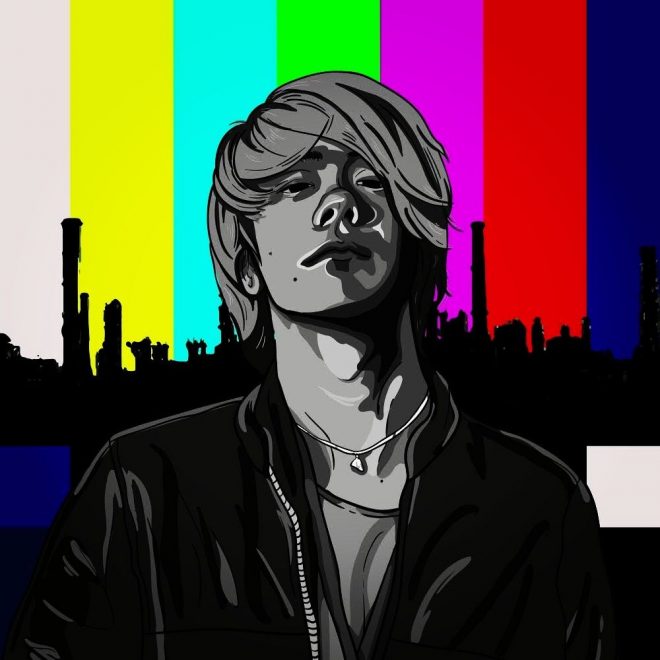
Meet Toshiki Fujimori, a videographer whose videos of live performances and music videos, as well as backstage glimpses, are truly like no other. Guided by instinct, timing, and a deep respect for what is happening in front of him and the camera, he never misses the moment that matters.
At nineteen, he was involved in a life-altering motorcycle accident that left him unable to use one of his arms. Rather than letting that stop him, he chose to see the life that followed as a “bonus” and was determined to live it to the fullest. Since then, he has built a name for himself in the music industry, bringing artists closer to their audience through his work.
In this interview, Fujimori shares his approach to shooting and editing, the challenges he has had to overcome to be where he is today, and why conveying heat, presence, and emotion are so crucial.
— Thank you for this opportunity to speak to you! To start off, could you share some facts about yourself without mentioning your profession? We’ll get to that later!
I'm Toshiki Fujimori, from Kanagawa, 33 years old and one-armed. Being one-armed has become an important part of who I am…Long story short, when I was 19, I was in a motorcycle accident that tore the nerves out of my left arm, and I’ve been living my life with one arm ever since. Apparently, for nerves to be torn out like that, it takes either more than a ton of force or getting shot straight through, otherwise, it just doesn’t happen. But if more than a ton of force is applied, a person usually doesn’t survive… (laughs). Because of that, there are very few cases like mine, and the doctors told me there’s no established treatment in modern medicine. After hearing that, the Super Mario “invincibility star” music started playing in my head (laughs). Basically, I live my life thinking that everything after the accident is a bonus, like extra, lucky time.
Half cup full: Instead of thinking “There’s only half left”, it’s about realizing that there’s still half left.
ー That must have been really tough, especially since the accident happened around the age when you’d normally be thinking about your future and career! Were you worried about your future after the accident?
Not being able to move one of my arms after the accident left me with nothing but anxiety about the future. I couldn’t ride a motorcycle anymore, and I lost the ability to do the things I loved, like playing guitar or basketball, so everything ahead of me felt pitch-black. But even in that desperate situation, I was able to realize how much love I had from my family and the people who stayed by my side. About two years after the accident, someone gave me an important theme for my life: “Half cup full”. Instead of thinking, “There’s only half left” it’s about realizing that there’s still half left in the cup. They told me they loved that mindset of mine, and having something I’d felt subconsciously put into words gave me a strange sense of confidence. It helped me accept myself for who I am. Because of that, I thought, “Even with one arm, I’ll give videography a try.”
ー What made you want to pursue videography?
When I was around 20, I used to go in and out of live houses in Shibuya, kind of killing time. One day, a DJ friend of mine suddenly said, “If you’ve got nothing to do, why don’t you try being a VJ?” That completely random comment made me start seriously paying attention to visuals. It started from there! I’m really grateful to my friend for saying something so out of the blue with that silly grin on his face.
ー What was the process like for you to actually become a videographer?
I mentioned to my older brother, who’s a stills photographer, that I wanted to get into video, and he introduced me to a director he knew. I ended up apprenticing under him, and that’s how I made my debut as an assistant.
fun memories, painful memories, and memories I hold dear all link back to music in some way...
Music has always been something that exists right beside me.
ー What was that experience as an assistant like? Did you run into anything especially difficult, especially at the beginning of your journey?
During my time as an assistant, I helped with filming and editing music videos that my mentor was working on, as well as offline editing for a music program. When things got really busy, there were times I practically lived at the office for a week, spending around 20 hours a day doing editing prep work. It was exciting and stimulating, but physically pretty tough (laughs).
— Before your career as concert videographer, what role did music play in your life?
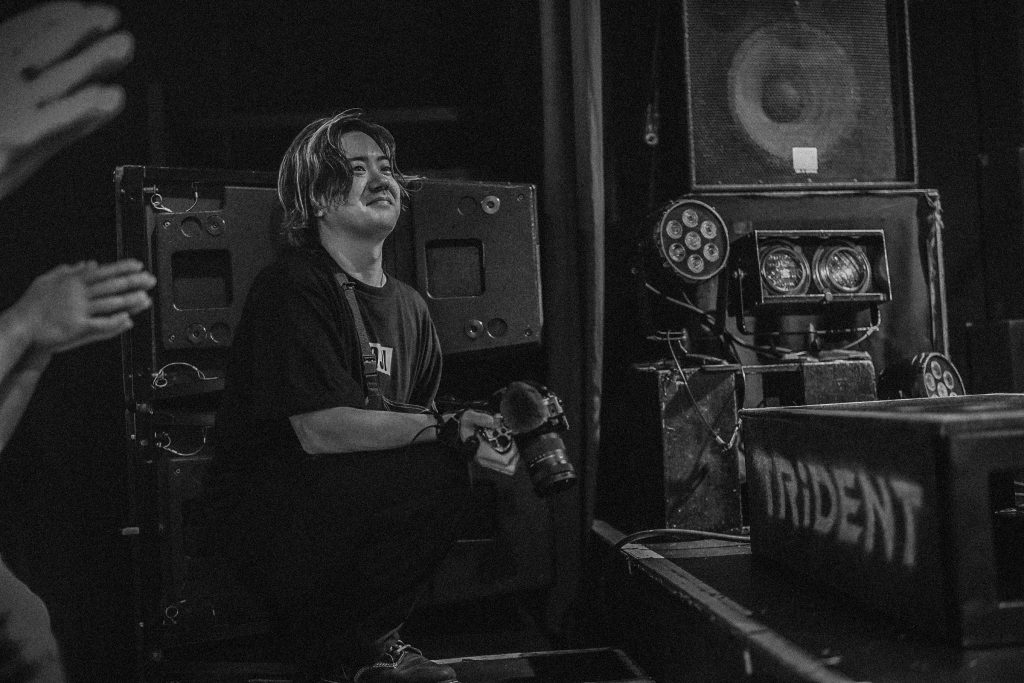
I think people who say things like, “I’ve been saved by music,” are full of BS, but at the same time it’s also true that my fun memories, painful memories, and memories I hold dear all link back to music in some way… I can even remember the smell of those days through music. Music has always been something that exists right beside me.
ー Did your perception of the music industry change after you began working behind the scenes?
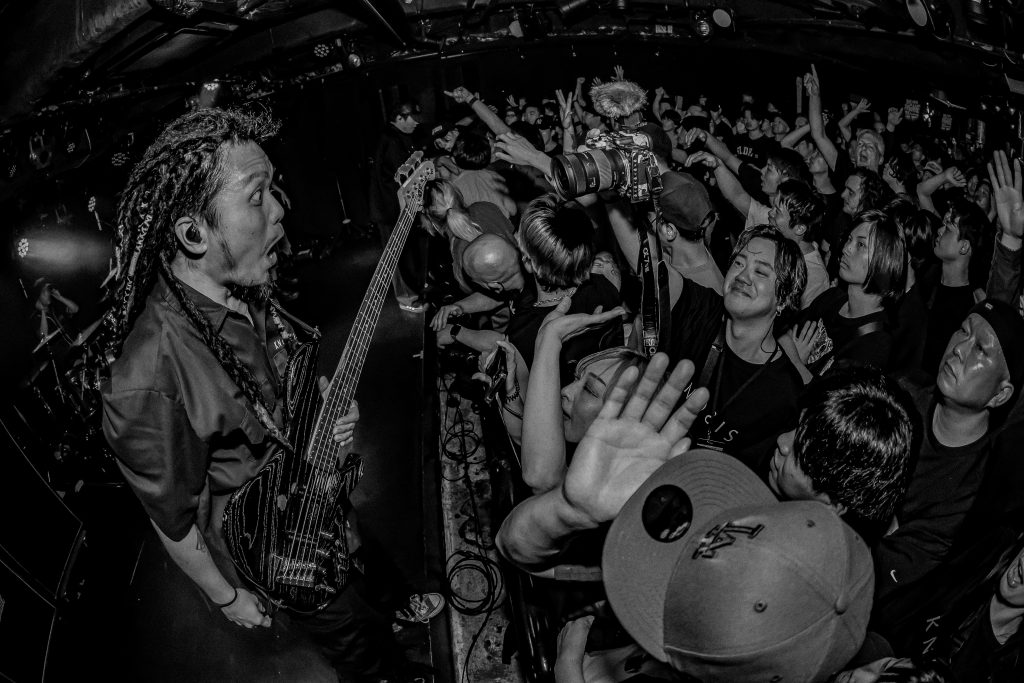
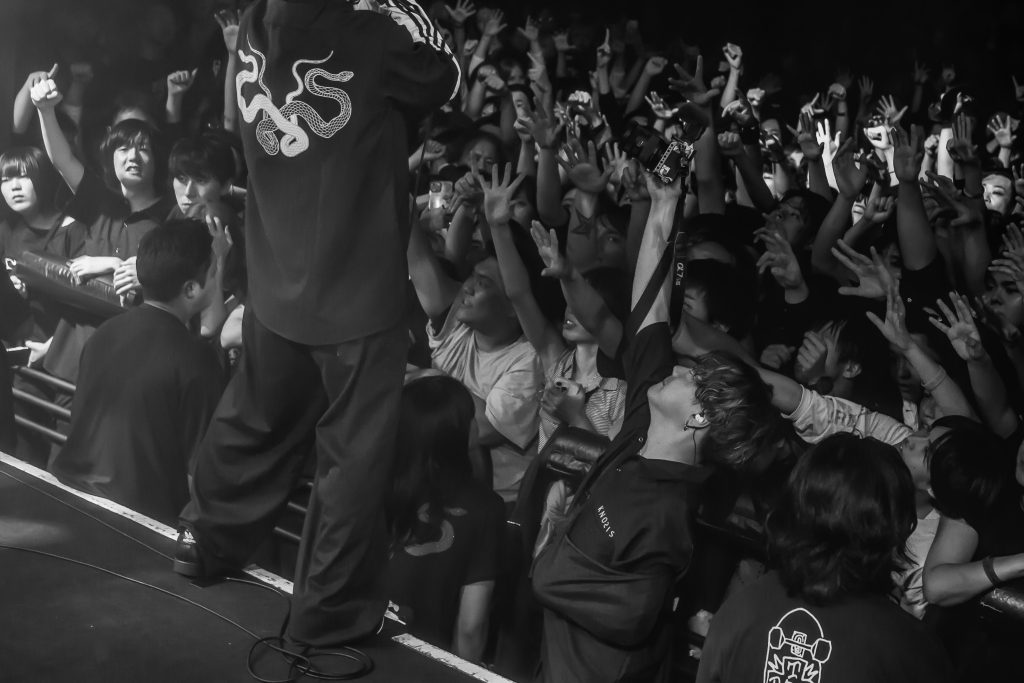
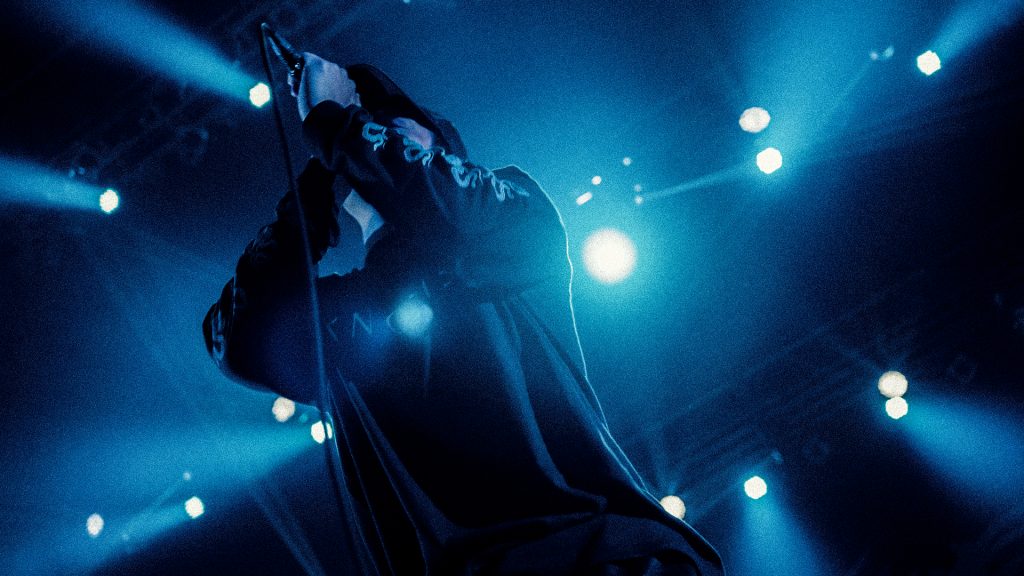
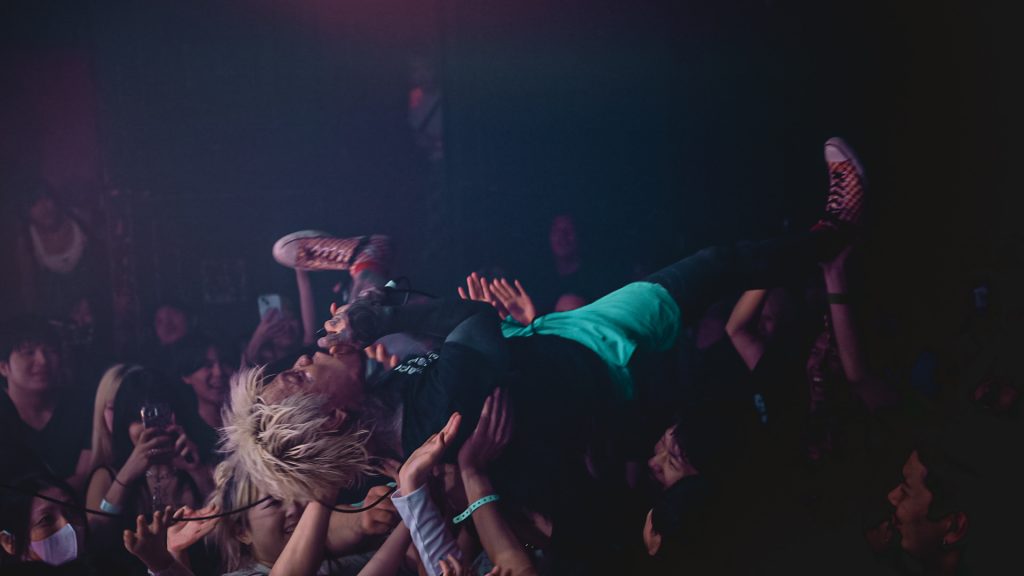
When I compare the time when I was just a music fan to now, when I’m sharing the same space and time with artists while filming, I feel life much more directly. Almost like I can sense their intensity with my own body. There are moments during concert shoots when I honestly think, “This person might push themselves until they collapse right here.” Because of that, I approach filming as if my own life is on the line too, shooting with the mindset that there might not be a next time.
ー How do you balance your vision with the artist’s image or branding? Do you ever struggle between “your own vision” and “client expectations”? How do you deal with that?
I basically build the structure based on what kind of visuals the clients are looking for, starting from the briefing. Within that, I’ll sometimes add a bit of my own expression, suggesting “I tried something like this, what do you think?”. There are times when my suggestions do not get used, so when that happens, I try to understand why and look at the decision as objectively as possible.
ー I am sure the preparation and planning differ depending on the project, whether it’s live or backstage footage, or a music video, but could you walk us through your usual process from the initial request to final delivery? Are there any aspects that are especially important to you?
For example, when I’m asked to shoot a live performance, we usually talk things through in advance before the actual show. But once I’m on site, I’m constantly adjusting on the fly, reworking the images and flow in my head based on what’s really happening in front of me.
What matters most to me is whether the video can convey things like heat, atmosphere, and emotion and whether it can make you feel how real and close that moment was. I do love clean, polished, almost cinematic visuals, and I definitely want to create work like that too. But ultimately, what moves me is feeling someone’s passion and intensity, and that’s the kind of footage I want to capture.
For live digest videos, my goal is to finish the final cut within about two hours after the show ends. I put everything into creating something fans can watch on their way home, while the excitement is still fresh and raw.
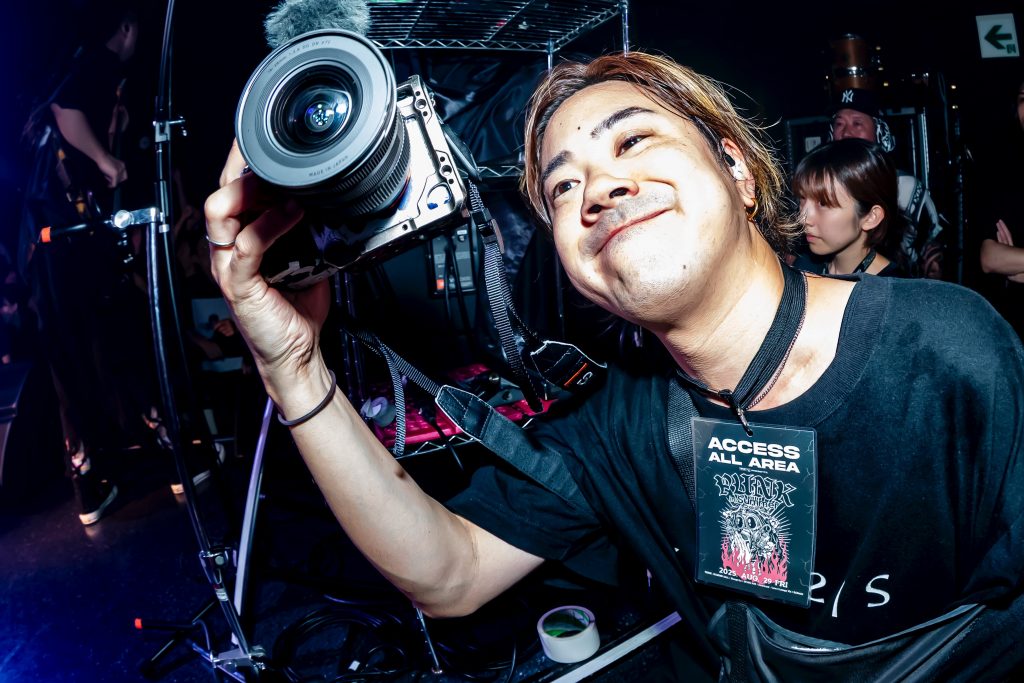
— What is your go-to camera and equipment? And what do you most pay attention to when choosing your gear?
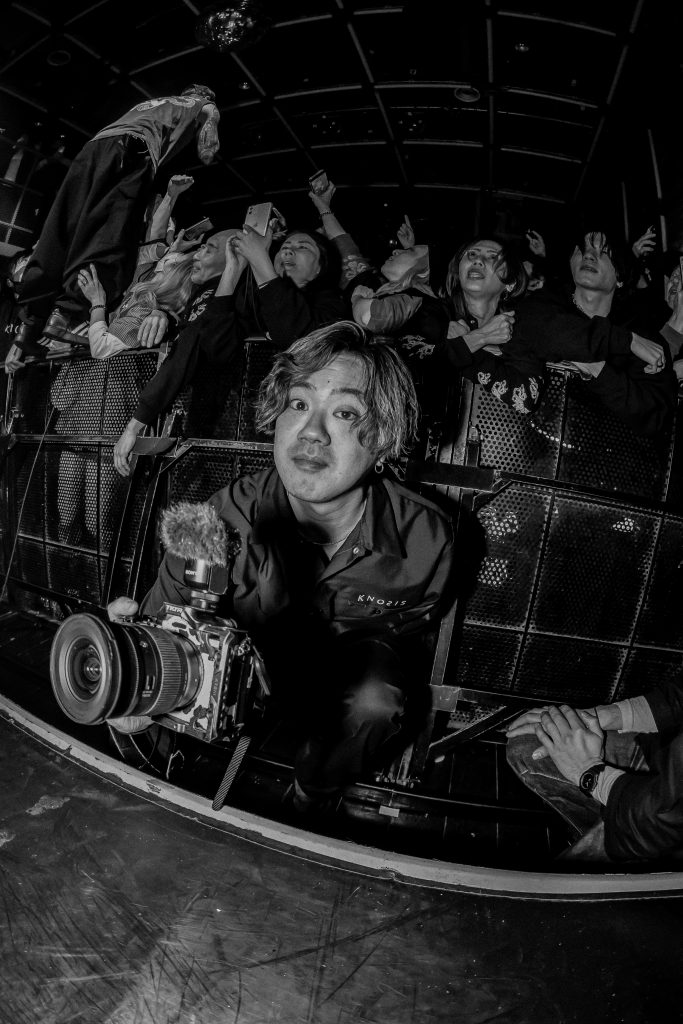
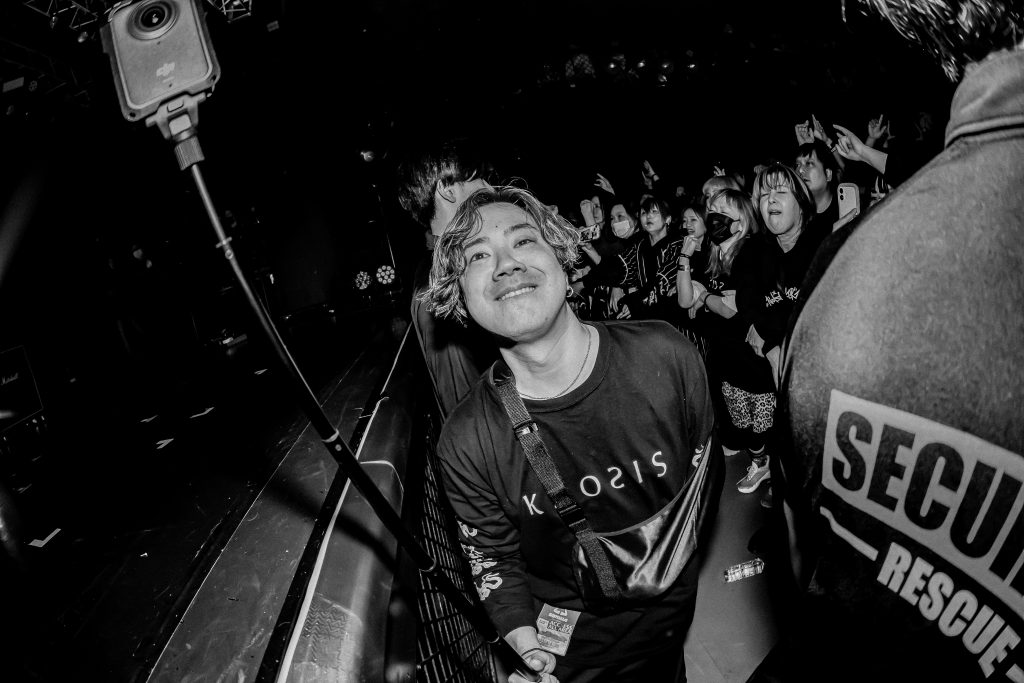
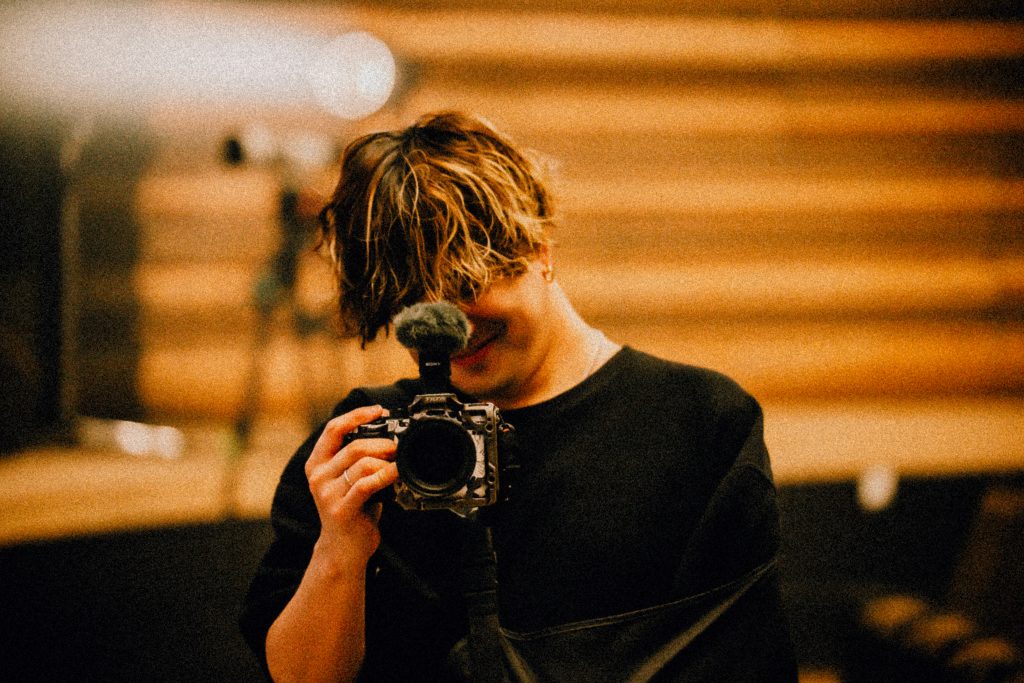
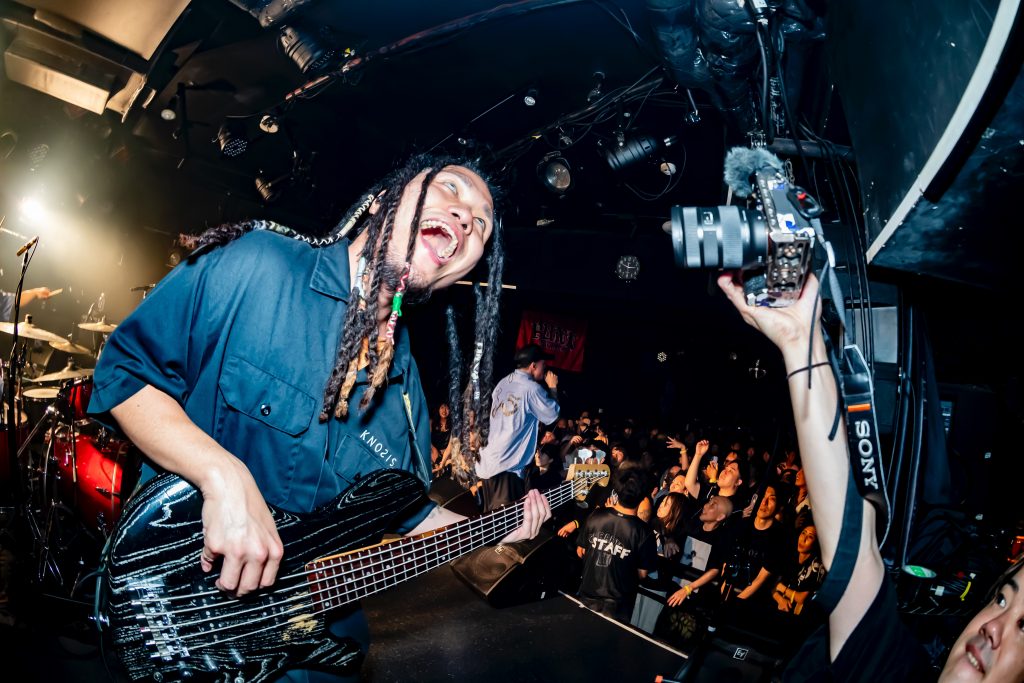
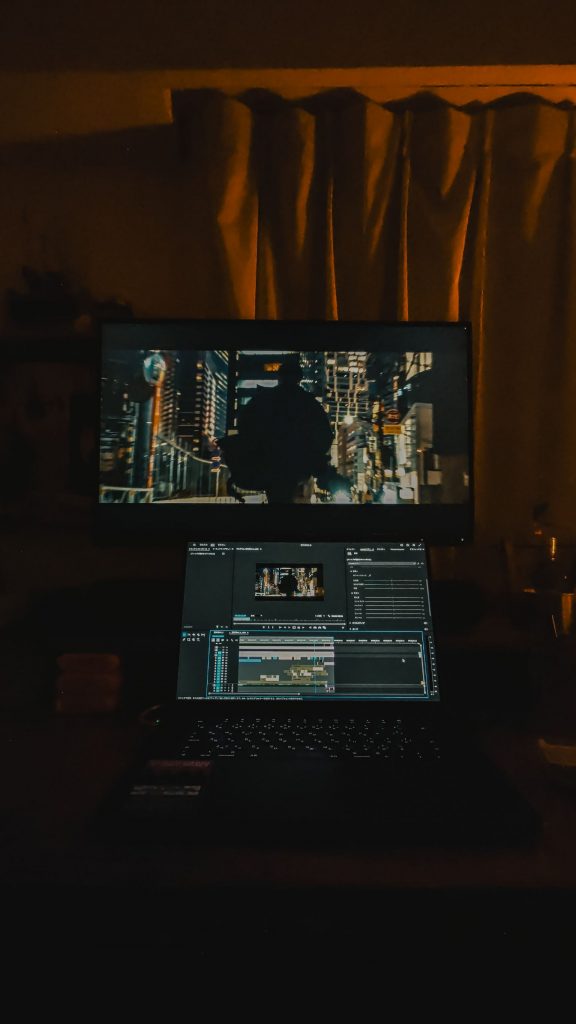
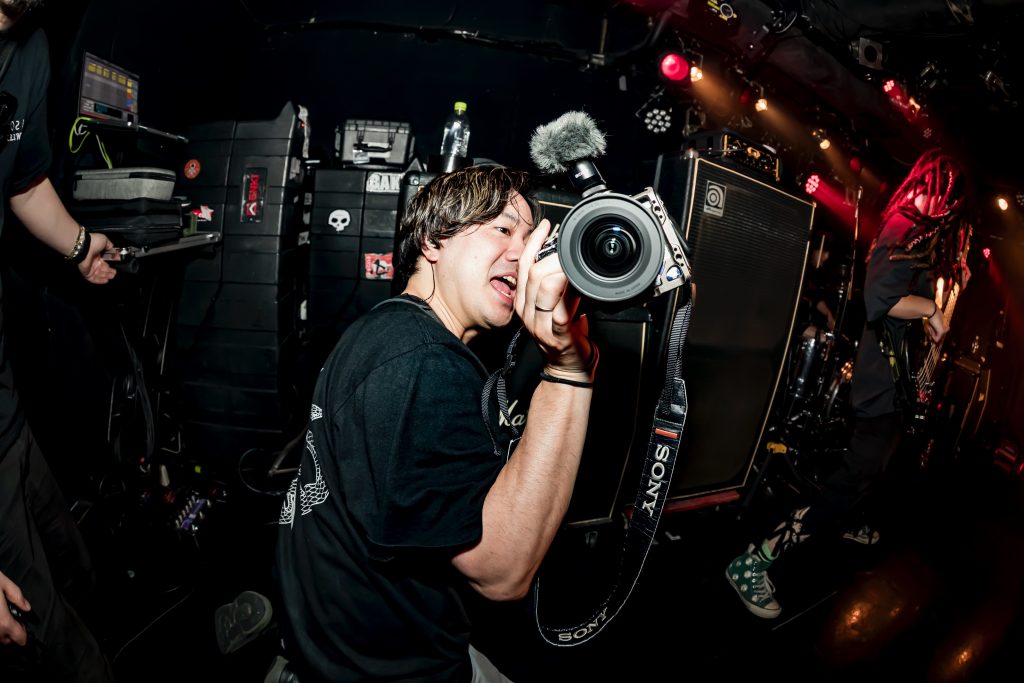
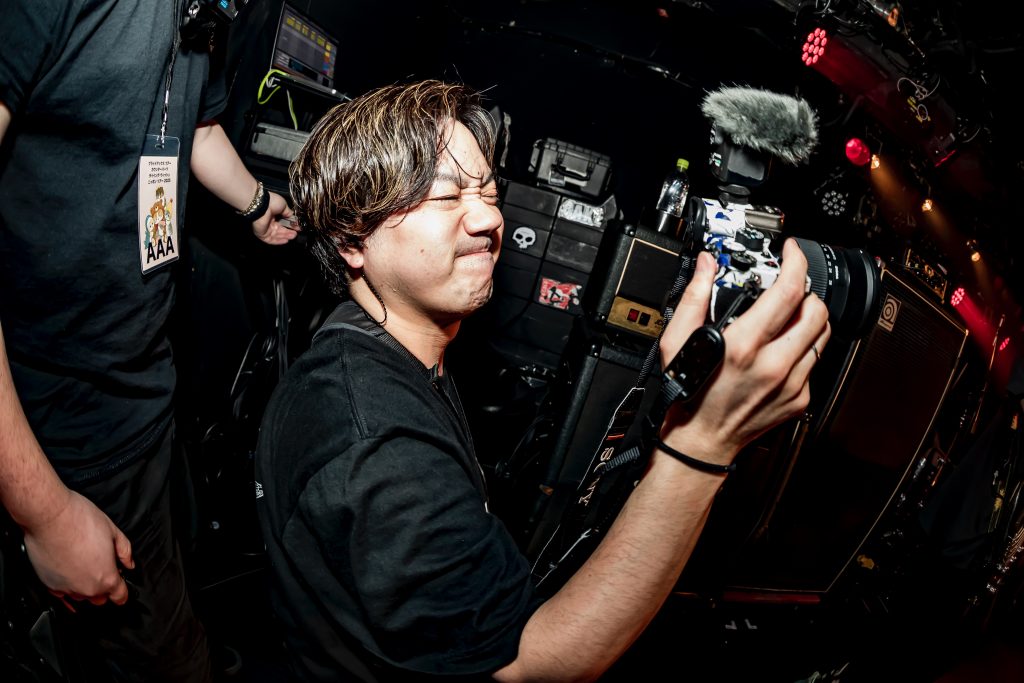
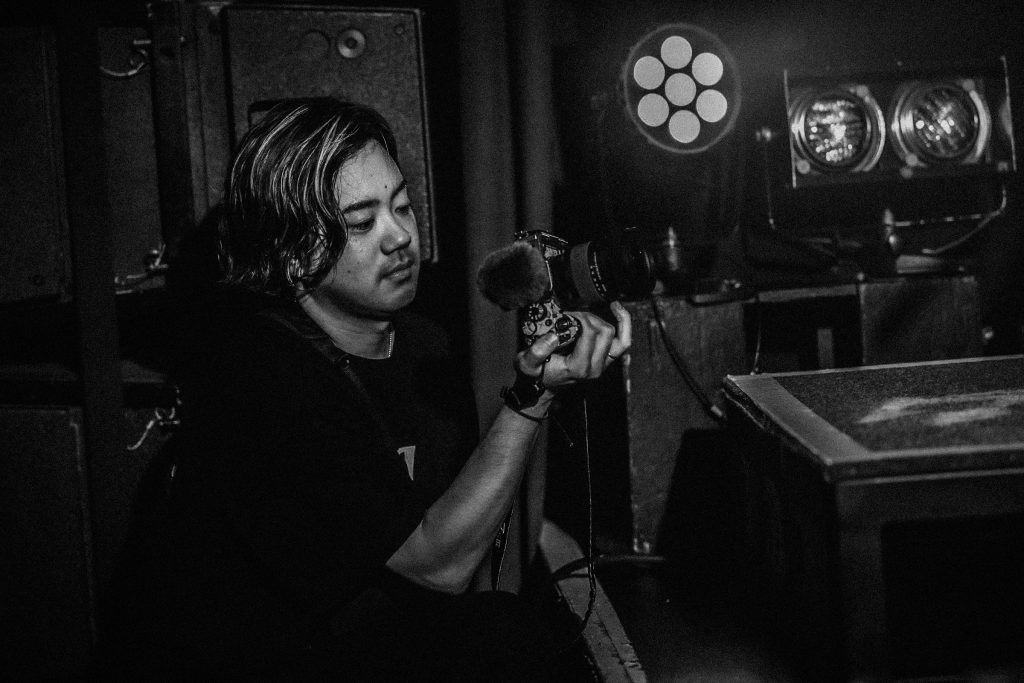
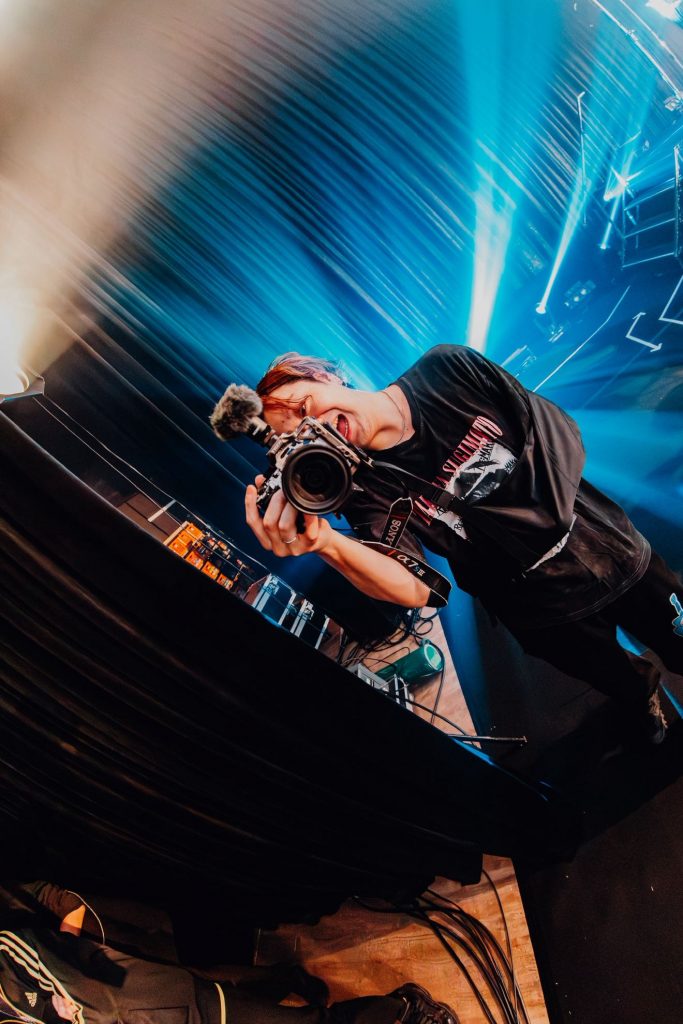
I shoot with a SONY a7siii, and for lenses I use a SIGMA 28–70mm f 2.8, SONY 24-105mm f4 and a SIGMA 16–28mm f 2.8. I prioritize lightweight and compact gear, since I’m shooting one-handed (laughs). Recently, I’ve also started using a small 360-degree action camera called the Osmo 360. As for settings, I usually shoot in 4K at 60p or 120p log. For editing, I mainly use Adobe Premiere Pro, and depending on the project, I’ll also use After Effects or Photoshop.
ー How do you approach translating an artist’s sound and personality into video?
I usually start by throwing everything in, even if it’s still messy and all over the place. Then I go back and strip things down from there. But if I leave it for too long, I end up wanting to change parts I thought were good just moments before. The fact that there’s no clear right or wrong choice is what makes it both difficult and interesting, no matter how long I’ve been doing it.
ー When you’re shooting backstage or on tour, I am sure the more footage you have the better. Are there situations where you consciously choose not to film? How do you decide that?
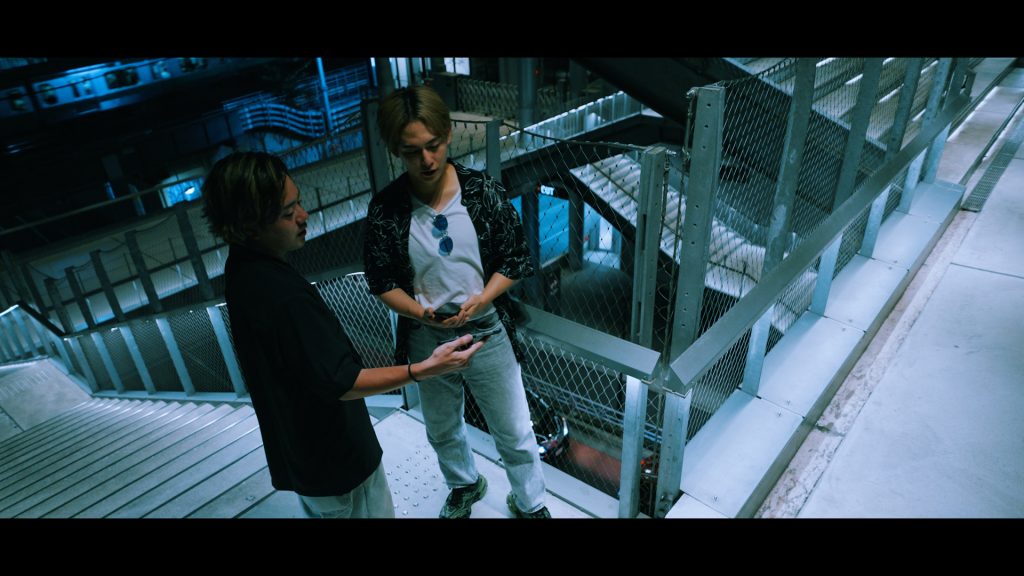
As a cameraman, there are definitely certain moments I always make sure to cover. But before that, as a person, I try not to disrupt the atmosphere. I’m very conscious of not becoming intrusive in a negative way.
ー Are there moments where you still feel anxious about your work, even after all your experience?
Every single time, I feel just as much anxiety as I do excitement. I go into each shoot with a real sense of tension, almost as if I were one of the band members myself.
ー What’s one moment at a show you’ll never forget, even if it never made the final edit?
Back when I was a second-year high school student, I was in a rock cover band and met a musician who left a huge impression on me. To someone like me, who had grown up very straightforwardly as a Japanese kid, he felt incredibly refreshing, having spent part of his life abroad despite being Japanese. I guess it is more accurate to call him basically American. Ever since we met, he’s been a constant source of inspiration for me for the past 16 years. Last year, I was finally able to work with his band for the first time. I will never forget the moment when backstage just before the show, he said, “It took long enough!” and pulled me into a hug. I’ve been a videographer for 12 years, and he and his band were people I have always wanted to film. Honestly, if it hadn’t been a summer festival, I might not have been able to brush off the moisture in my eyes by just saying, “Man, it’s hot out here.”
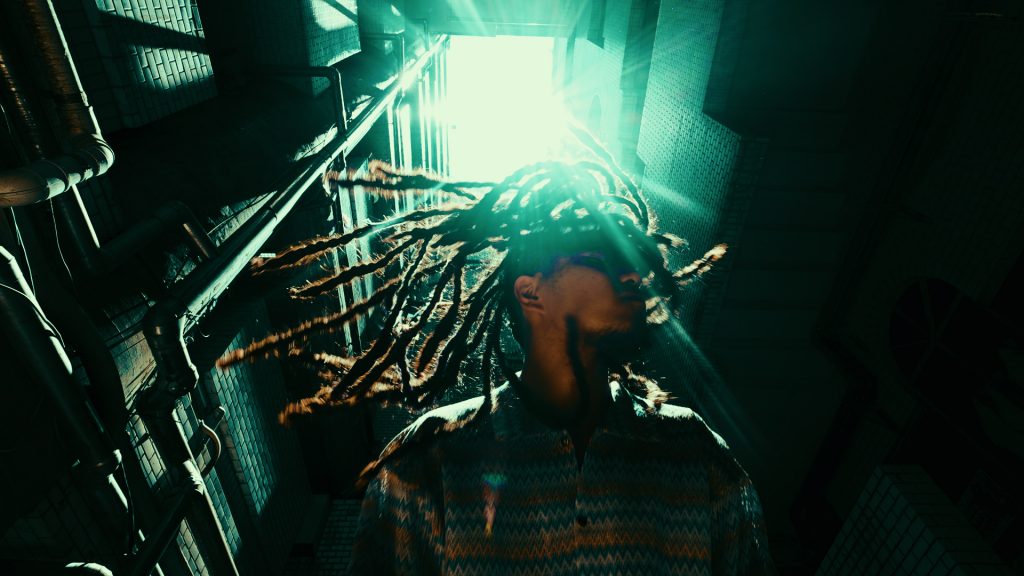
ー How do you protect your creativity when you’re under intense deadlines?
When I lose focus while editing, I switch to a different edit, or at least change my surroundings or what I’m engaging with. I’ll move to another room, step outside, or watch a film. By doing that, I can step back and look at the work from a wider perspective, and then gradually zoom in and refocus.
ー Looking back on your career so far, was there a period you struggled with the most? How did you overcome it?
I’m not sure if I’d call it a struggle exactly, but now I can look back and think, “That experience is why I’m where I am today.” Still, the period around the pandemic was tough. I was doing a lot of different things, like shooting and editing variety-style content for YouTube, working on projects like typical YouTuber videos, even planning content, which was honestly tough. It just didn’t suit me.
What I wanted to do and what was being asked of me were completely different things, but I put up with being treated badly because I needed to make a living. At the same time, I kept asking myself whether I was really okay with that. It’s not like I needed to cling to some big sense of pride, but I was constantly questioning whether this was really where I was supposed to be.
— During shows, unexpected things must happen all the time. Were there moments where you thought, 'This is really bad'?
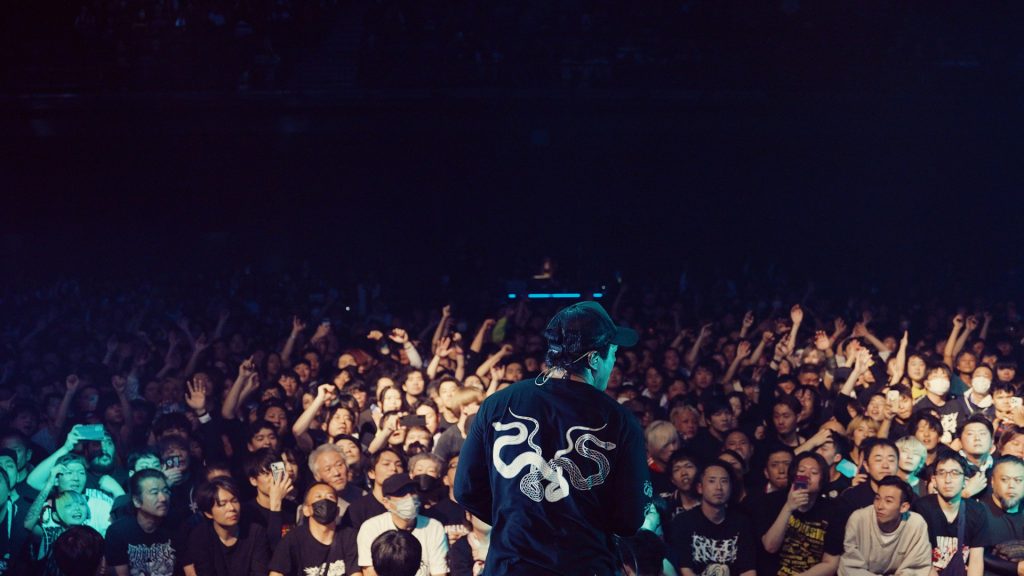
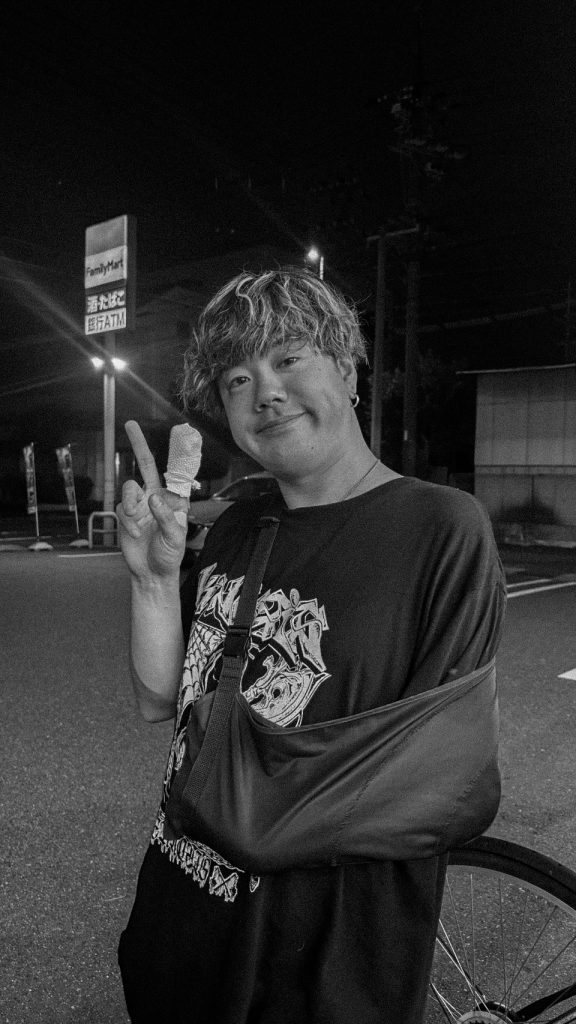
This happened fairly recently, when during a concert shoot I accidentally collided with one of the band members on stage, and cut my index finger badly. I ended up needing eight stitches. I felt incredibly sorry for worrying the band and causing trouble, and while I was trying to stay calm, I was also in a bit of a panic at the same time.
— Are there artists you would like to work with some day?
I could go on forever, but the bands that were closest to me when I was in high school were ‘the pillows’ and ‘a flood of circle’. And then there’s the American band ‘Sleeping With Sirens’.
‘the pillows’ have since disbanded, but they were someone I admired right up until the very end. As for ‘a flood of circle’, I listened to them almost every day when I was staying in Canada for about a month. Whether I was walking down unfamiliar streets, suddenly getting picked on by local kids, or accidentally getting on the wrong bus and ending up way too far away. I was listening to them the whole time (laughs).
— Do you have a favorite ‘flood of circle’ song you recommend to people who have never heard of that band?
Songs I would recommend from ‘a flood of circle’ are:
・泥水のメロディー
・Center Of The Earth
・コインランドリー・ブルース
・308
It’s honestly really hard to choose.
— Do you have any advice for people starting out in videography?
Advice… I’d say start by watching as many good videos as you can and copying them. If I can do it with one arm, anyone can, so I’d say just give it a try. I guess that’s it (laughs).
ー What kind of process and approach do you think are necessary to achieve your goals and dreams?
I tried answering things like “look at things objectively” or “don’t worry about what others think or about precedents,” and then kept deleting those answers… but in the end, I think my answer really just comes down to, “If you want to do something, then just do it” (laughs).
— Speaking of dreams, do you currently have a dream?
That would be, waking up tomorrow again!
— And last but not least, what would you say is the biggest reason why you’re doing what you’re doing?
This is something my mentor asked me when I first started working with video. “What do you want to become by making a living through video?” The answer I gave back then is still my motivation to this day: “I want people to say ‘That’s insane’ when they see my work.”
Interview: Olga Mazlina
Check out Toshiki Fujimori's work here: